

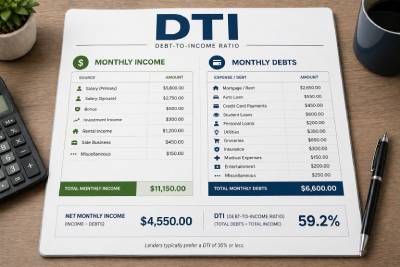
What is DTI?
Debt-to-income ratio (DTI) is one of the most important numbers in the mortgage process, yet it's rarely explained clearly.
For many buyers, the conversation starts with, "How much home can I afford?" A better question is, "How does my current monthly financial structure support a future mortgage payment?"
That's where DTI comes in.
What Debt-to-Income Ratio Actually Measures
Debt-to-income ratio (DTI) measures how much of your gross monthly income is committed to required monthly debt payments. It's expressed as a percentage.
If you earn $7,000 per month before taxes and your total required debt payments equal $2,800, your DTI is 40%. That means 40% of your monthly income is already spoken for.
DTI isn't about judging spending habits. It's about measuring sustainability.
How did we get to this equation?
Debt ratios have been part of mortgage underwriting for decades. Traditional lending once followed what was commonly known as the "28/36 rule":
- 28% maximum for housing expenses and 36% maximum for total debts
Over time, lending evolved. Automated underwriting systems, expanded credit modeling, and government-backed programs introduced more flexibility. Today, the number isn't a rigid ceiling; it's part of a broader financial picture.
After the addition of the Dodd-Frank Act in 2010, in response to the 2008 housing crisis, DTI was expanded to a broader view known as the Ability-To- Repay. So now modern underwriting looks at:
- Credit strength
- Cash reserves
- Employment stability
- Loan type
- Compensating factors
DTI remains central, but it's evaluated in context.
How DTI Is Used Today
There are two ratios lenders evaluate.
1. Housing Ratio
This measures only your projected housing payment compared to your income.
It includes:
- Principal and interest
- Property taxes
- Homeowners insurance
- Mortgage Insurance (if applicable)
- HOA dues (if applicable)
This helps determine whether the housing payment itself is reasonable.
2. Total DTI
This is the more critical number.
It includes:
- Your full housing payment
- Minimum credit card payments
- Auto loans
- Student loans (even if they're deferred)
- Personal loans
- Child support or alimony (if applicable)
This ratio measures your full financial load. Remember these monthly payments are divided by your gross monthly income.
Depending on the loan program, approvals often range into the mid-40% range, sometimes higher with strong compensating factors. The key is alignment between income, debt structure, and long-term affordability.
Just a quick note, here are a few things that are not included in these calculations:
- Utilities
- Groceries
- Cell phone bills
- Streaming services
- Retirement contributions
- Gym memberships
Lenders calculate based on legally required obligations, not lifestyle expenses.
Why This Matters for Home Buyers
Your DTI affects more than approval.
It influences:
- Maximum purchase price
- Loan program eligibility
- Interest rate options
- Mortgage insurance costs
- Overall financial flexibility after closing
A lower DTI doesn't just improve approval odds. It often creates better loan structure and stronger negotiating power. More importantly, it protects your future options.
Homeownership should create stability and wealth, not financial pressure.
How to Improve Your DTI Before Buying
The good news: DTI is adjustable.
1. Reduce Revolving Debt
Paying down credit cards lowers minimum payments, which directly lowers DTI. Even modest reductions can create meaningful improvements.
2. Avoid New Obligations
Financing a vehicle or opening new credit lines before closing can shift your ratios quickly. Timing matters.
3. Increase Qualifying Income
Overtime, bonuses, consistent commission income, or adding a qualified co-borrower can strengthen ratios when properly documented.
4. Choose the Right Loan Structure
Different loan programs calculate student loans and other debts differently. Structure matters more than many buyers realize.
5. Be Strategic About Purchase Price
Buying below your maximum approval can keep your DTI healthier and preserve long-term flexibility. Qualification limits are not spending recommendations.
Final Thoughts
DTI isn't a hurdle designed to slow you down. It's a risk management tool built into the mortgage system to protect both borrower and lender. When understood early, it becomes something you can plan around rather than react to.
Homeownership isn't about stretching to the highest possible number. It's about building stability and creating room for future opportunities.
The strongest buyers don't just focus on getting approved. They focus on structuring their finances in a way that supports the life they're building long after closing day.